How Much Does Basement Flooring Cost?
How much does basement flooring cost? The honest answer depends on three things: what condition your concrete slab is in, whether you need a plywood subfloor or moisture barrier first, and which flooring material you pick. Two St. Louis basements with the same square footage can land at wildly different prices because one slab is dry and level and the other needs prep work before a single plank goes down. This guide walks through every factor that moves the number, so by the end you will know exactly how to get an accurate estimate for your own basement instead of guessing from someone else's.
What Drives Basement Flooring Costs
Basement floors are not first-floor floors. You are installing over concrete, below grade, in a space where moisture is always part of the conversation. That changes the math on every material. Here are the factors that actually move the price.
Square footage and layout
Bigger floors cost more, but not in a straight line. Materials scale with square footage, while labor scales with complexity. A wide open rectangle installs fast. A basement chopped up by a load-bearing wall, a mechanical room, a basement bar area, and a basement bathroom means more cuts, more transitions, and more labor hours per square foot. Walk your basement and count the rooms and corners. More of them means the cost per square foot creeps up even if the total area stays the same.
The condition of your concrete slab
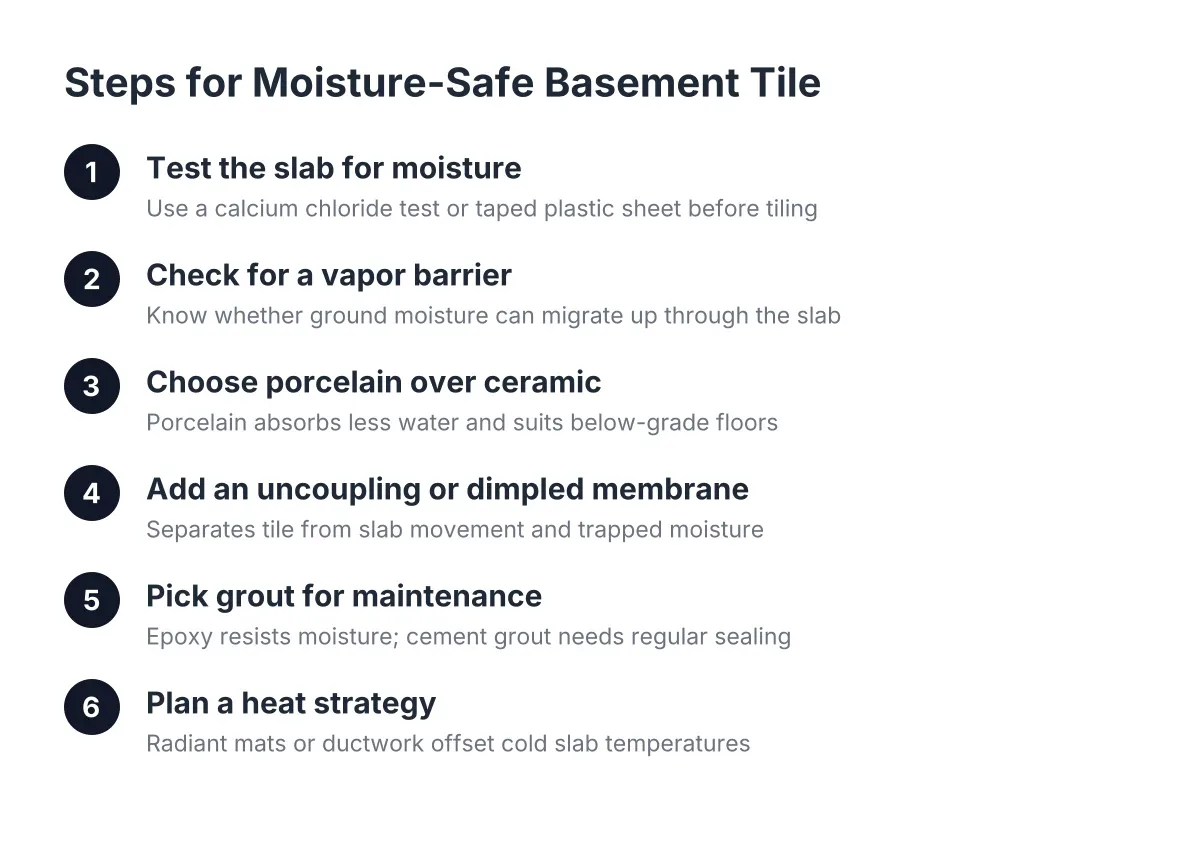
This is the factor most homeowners cannot see coming. Flooring goes over your slab, and the slab has to be dry, level, and free of active cracks first. A clean, level slab keeps prep costs near zero. A slab with low spots needs leveling compound. Active moisture coming up through the concrete needs a vapor barrier or sealing before anything else happens. You can get a rough read yourself: tape a square of plastic sheeting to the floor for a couple of days. If condensation shows up underneath, moisture is part of your project and part of your price.
Whether you need a subfloor
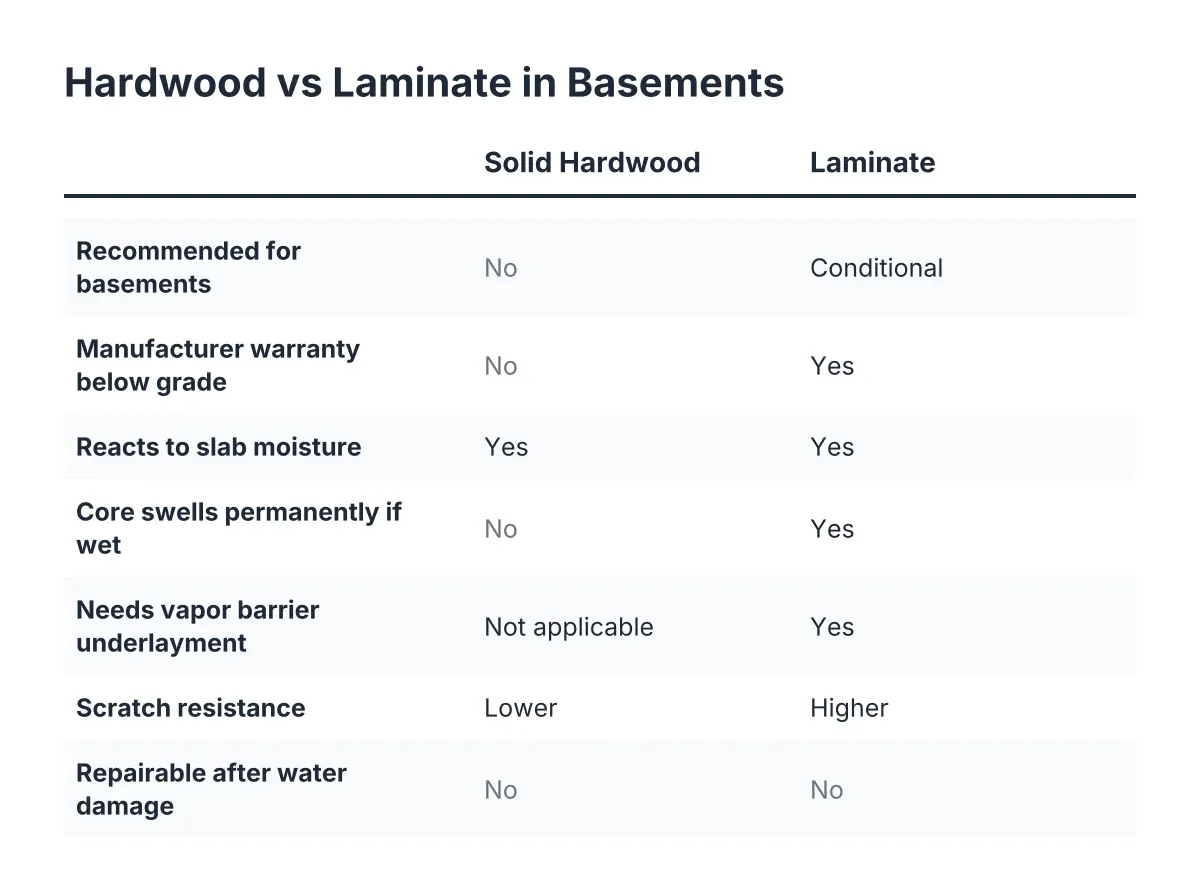
Some flooring can go straight on concrete. Carpet with the right pad and certain vinyl products often can. Hardwood and most wood-look floors want a plywood subfloor between them and the slab. A subfloor adds material and labor, but it also adds warmth underfoot, a flatter surface, and protection for the finished floor above it. If your heart is set on hardwood in a St. Louis basement, budget for the subfloor as part of the flooring decision, not as a surprise later. Our page on basement flooring in St. Louis covers the carpet versus hardwood decision in more depth.
The flooring material you choose
This is the lever you control most directly. The cost of basement flooring options ranges from budget-friendly carpet and sheet vinyl up through luxury vinyl plank, engineered hardwood, tile, and epoxy coatings. Carpet is usually the least expensive to install over a basement slab. Engineered hardwood and tile sit at the higher end once you count subfloor and prep. Epoxy skips the subfloor question entirely because it bonds to the concrete itself, but its price rides on how much slab prep the coating needs. Material choice interacts with everything above it, which is why no honest contractor quotes a floor without seeing the basement.
Moisture management and drainage
St. Louis basements deal with humid summers and clay soil. If your basement has a history of water, even minor seepage, that history belongs in the flooring budget. Solving moisture before flooring might mean sealing, a drainage fix, or choosing a material that tolerates damp conditions. Skipping this step does not save money. It moves the cost a few years down the road and multiplies it, because you pay for the fix and a replacement floor.
Whether flooring is part of a larger project
Flooring installed as part of a full basement finishing or basement remodeling project usually prices differently than flooring alone. When a contractor is already framing walls, adding a basement bathroom, or building a basement bar, the flooring crew, permits, and site prep are already in motion. Standalone flooring jobs carry their own mobilization. Neither approach is wrong; just know which one you are pricing so quotes compare fairly.
Cost Factor Table
| Factor | Pushes the price down when… | Pushes it up when… |
|---|---|---|
| Square footage and layout | The space is one open rectangle with few transitions | The floor plan has multiple rooms, closets, and cut-arounds |
| Slab condition | The concrete is dry, level, and crack-free | The slab needs leveling, sealing, or crack repair first |
| Subfloor | Your material installs directly on concrete | Hardwood or wood-look floors require a plywood subfloor |
| Material choice | You choose carpet or basic vinyl | You choose engineered hardwood, tile, or heavy-prep epoxy |
| Moisture history | The basement has stayed dry through wet seasons | Seepage or humidity needs fixing before flooring goes in |
| Project scope | Flooring rides along with a full basement finishing job | It is a standalone job with its own setup and permitting |
How to Get an Accurate Estimate for Basement Flooring Options
You cannot price a basement floor from a website, ours included. What you can do is show up to the estimate conversation prepared, which gets you a tighter number faster.
Have this ready:
- Measurements. Length and width of each area getting flooring. Rough is fine; the contractor will verify.
- Moisture history. Has water ever come in? When, where, and how much? Honesty here protects your investment.
- Your material preference. Even a loose one. "Carpet in the family room, something hard-surface near the bar" narrows the estimate range immediately.
- Photos of the slab. Cracks, stains, or white powdery residue (that is efflorescence, a sign of moisture moving through concrete) all matter.
A good quote itemizes the work. It should separate slab prep, subfloor if needed, materials, and installation labor as distinct lines. It should name the specific flooring product, not just "vinyl plank." And it should say what happens if the crew opens up the space and finds a problem, because a quote that hides that scenario is where surprise costs live.
Estimates differ between contractors for real reasons: different material suppliers, different assumptions about prep, and different levels of detail in the scope. When two quotes are far apart, the gap is usually in what one of them left out. Ask each contractor to walk you through their line items until the difference makes sense.
Ways to Keep the Cost Down
There are legitimate ways to lower the price without buying a floor you will regret.
- Match the material to the room's job. Carpet in a media room, hard surface near the basement bar or bathroom. Mixing materials by zone often beats putting the premium option everywhere.
- Fix moisture once, before flooring. The cheapest floor is the one you never replace. Solving a damp slab first prevents the expensive version of this project.
- Bundle flooring with your basement finishing project. If a remodel is on your horizon anyway, pricing the floor inside the larger scope usually beats doing it as a separate job later.
- Get two or three itemized quotes. Not to chase the lowest number, but to see where the quotes disagree. That disagreement shows you where the real cost decisions are.
- Handle the clear-out yourself. Moving stored boxes, furniture, and old carpet out of the basement before the crew arrives trims labor hours off the job.
Cost Questions People Ask
How much does an epoxy basement floor cost?
Epoxy pricing hinges on slab prep more than on the coating itself. A clean, sound slab needs grinding and a straightforward application. A slab with cracks, old paint, oil stains, or moisture issues needs repair and testing before the epoxy can bond, and that prep drives the price. Epoxy skips the subfloor expense entirely, which can make it competitive with other basement flooring options, but only a slab inspection tells you which side of the prep line you are on.
Is carpet or hardwood cheaper for a basement?
Carpet almost always installs for less, because it goes over the slab with a pad and no subfloor. Hardwood in a basement means engineered product plus a plywood subfloor, so you are paying for two layers of material and labor. The tradeoff is durability and resale appeal, which is why many St. Louis homeowners split the difference by zone.
Does basement flooring require a permit in St. Louis?
Flooring on its own often does not, but the answer changes when flooring is part of a larger basement finishing project that involves framing, electrical, or plumbing. Permit requirements depend on your specific municipality within the St. Louis area and the full scope of work. Ask your contractor to spell out which permits your project needs before work starts; a contractor who shrugs at that question is telling you something.
Why do flooring quotes vary so much between contractors?
Usually the difference is prep. One contractor priced leveling and moisture sealing into the job, and another assumed your slab is perfect and will bill the prep as a change order later. Compare the line items, not the bottom line, and ask each contractor what happens if the slab turns out worse than expected.
The Bottom Line
How much does basement flooring cost? It comes down to your slab's condition, whether a subfloor is needed, and the material you choose, and no one can put a real number on those without seeing your basement. Get two or three itemized quotes from local contractors, ask each one to separate prep from installation, and make sure moisture is addressed before anything goes down. That is how you get a price you can trust and a floor that lasts.
If you need basement finishing, STL Basement Finishing can help.
Related guide: basement flooring options — Complete Guide
Prefer to talk it through? Call (314) 916-6297 — a quick call is usually the fastest way to get a straight answer for your situation.